Hospitals and schools carry obligations most businesses do not. One compromised supply closet, one gnawed conduit, one rodent dropping in a food prep area becomes a liability that affects patient safety, student attendance, regulatory compliance, and public trust. In Los Angeles County, the combination of dense urban neighborhoods, varied building ages, and a Mediterranean climate makes sustained rodent pressure almost constant. That reality changes how facilities managers should think about rodent control, procurement, and partnerships with a rodent control company in Los Angeles County.
Why this matters Rodents spread pathogens, chew through wiring, contaminate sterile fields, and trigger code-review inspections. A single rodent sighting in a hospital can prompt an internal review and external reporting to public health, while recurring problems in schools can lead to closures or lost instructional days. Investing in professional, documented rodent control is not optional when patient safety and child welfare are involved, it is a measurable risk-reduction strategy.
Understanding the local challenge Los Angeles County has neighborhoods that are decades old, buildings that have been retrofitted repeatedly, and microclimates that keep rodents active year-round. Rooflines, alleyways, adjacent vacant lots, and dense garbage pickup schedules all create pathways and food sources. Roof rats and Norway rats are both common, with roof rats favoring higher elevations and attics, and Norway rats nesting at ground level near foundations and plumbing lines.
Facilities management in schools and hospitals faces trade-offs. For hospitals, any chemical control must be compatible with clinical needs, air filtration systems, and immunocompromised patients. For schools, there are concerns about children's exposure, liability, and parent relations. Both environments demand documentation, thorough inspections, and communication plans that can stand up to audits.
Selecting the right provider Not every pest company is prepared to serve a hospital or a school. The right rodent control company in Los Angeles County will offer professional licensing, experience with healthcare and educational facilities, and clear, written service protocols that meet local health department standards. Look for experience controlling rodents in sterile environments and experience with integrated pest management, often abbreviated IPM. IPM is not a catchphrase, it is a practical framework that prioritizes inspection, exclusion, sanitation, and targeted controls, with pesticide use reserved for when other tactics are insufficient.
Practical criteria to evaluate a contractor
- proof of licensure and insurance appropriate for public institutions; documented experience with hospitals or school districts and references; written IPM plan that details inspection frequency, monitoring methods, and exclusion work; protocols for nonchemical controls and minimal-risk chemical application when necessary; reporting and documentation templates that can be used during audits.
These five points form the minimum bar. Do not accept vague answers about "experience" or "we'll Rodent control company in Los Angeles County handle it." Ask for specifics: the number of comparable facilities serviced, the last time they performed a wall or attic exclusion, or a sample monthly report.
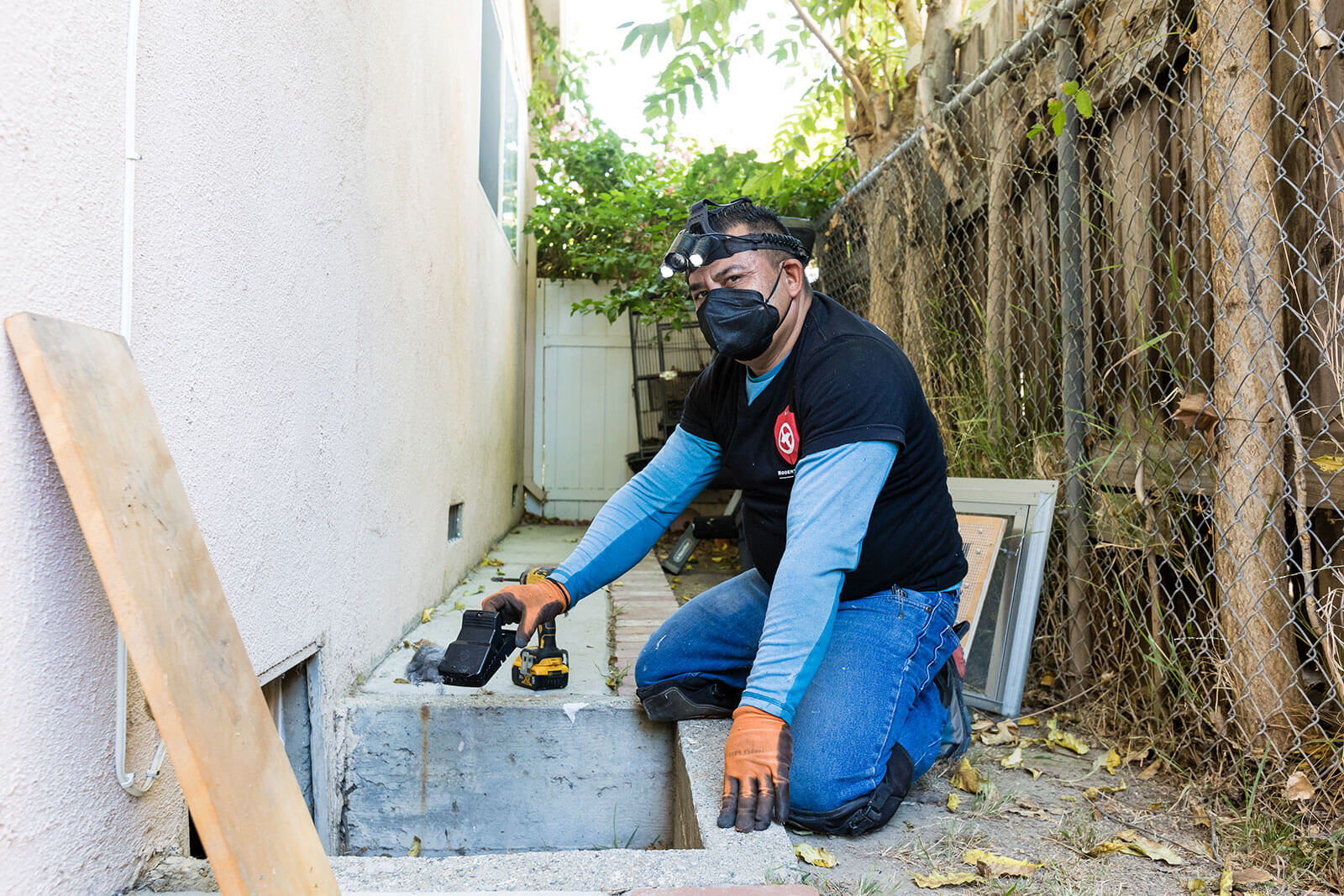
Inspection first, not bait first A mistake I see repeatedly is the contractor who arrives with boxes of bait and trackers before doing a full facility inspection. In a hospital or school, that approach risks misplacing traps, creating trip hazards, or placing bait where it could be accessed by non-target individuals. A proper first visit is a thorough inspection. That includes attic and crawlspace checks, evaluation of food service and waste disposal areas, examination of mechanical rooms and electrical conduits, and a perimeter assessment for landscape issues and entry points.
Concrete example: a mid-size community hospital in the San Gabriel Valley had recurring sightings in a cafeteria. Three successive contractors set traps in the kitchen, removed a handful of rodents, and closed the job. Within months, sightings resumed. The firm that finally solved the problem discovered a damaged sewer vent and a cracked chase wall behind the cafeteria's steam lines. They sealed the chase, installed tubular one-way exclusion devices on the vent, and adjusted waste handling procedures. No sightings for 18 months afterwards. Those outcomes come from inspection-driven plans, not quick bait-and-go fixes.
Exclusion is where the long-term value lives Traps and rodenticides remove current individuals, but exclusion prevents re-entry. On institutional campuses, exclusion can take many forms. Steel wool and caulk may suffice for small gaps, while hardware cloth, metal door sweeps, and concrete repair may be necessary on older masonry buildings. In hospitals, ceiling plenum integrity is crucial, because rodents can travel inside voids and contaminate HVAC components. In schools, playground storage sheds, kitchen loading docks, and athletic field concessions often present unexpected vulnerabilities.
Budgeting for exclusion is uncomfortable because it looks like capital work, not routine operating expense. Yet a single properly installed exclusion barrier can eliminate the need for ongoing reactive treatments for that entry point. Candid trade-off: sealing a foundation penetration may cost several hundred to a few thousand dollars depending on complexity, but persistent monthly service calls can exceed that within a year.
Monitoring and documentation Monitoring is the backbone of any responsible IPM program. For hospitals and schools, this means documented placement of monitors and traps, regular inspections logged with dates and findings, and clear thresholds for escalation. Electronic monitoring systems exist that report activity remotely; they are costly, but for critical areas like pharmacy loading docks or surgical suite support spaces, the ability to record and timestamp an activity can be worth the investment.
A robust documentation practice helps when regulators arrive. If your pest management provider uses standardized monthly reports that show trap checks, captures, corrective actions, and photographs of exclusion work, you will save time during reviews and mitigate liability faster.
Chemical controls when necessary There are occasions when rodenticides are the only practical immediate measure, for example during an acute infestation that threatens infrastructure. Even then, hospitals and schools must apply chemicals with restraint. Use tamper-resistant bait stations, lockable monitors, and rodenticides with known profiles. Place stations in secured mechanical rooms or exterior perimeters, not in patient care floors or classroom interiors. Rotate active ingredients judiciously to reduce bait shyness and resistance, and always log placements and removals.
Always demand an explanation of how a contractor plans to minimize non-target exposure and how they will handle dead rodents, especially in campus landscapes and near storm drains. Dead rodents should be removed promptly under safe handling protocols and documented.
Coordination with other campus functions Rodent control is not a siloed task. Facilities, food service, groundskeeping, procurement, and security all affect outcomes. For example, a landscaping crew that places mulch too densely against foundation walls creates hiding spots. Cafeteria staff who leave food debris in service corridors undermine sanitation controls. A pest company that trains staff in best practices and coordinates timing of exclusion work with maintenance crews will achieve better results.
A practical step is a quarterly IPM review meeting that includes facilities, clinic leadership or school administrators, grounds, and food service. Keep the meeting short, focused on actions and outcomes, and use it to review recent reports. If a contractor is doing their job, their reports should drive the agenda.
Procurement language and contract details Write contracts that include response times, defined service levels, and performance metrics. For hospitals, a typical response time standard for confirmed rodent sightings might be 24 hours. For schools, that could be 48 hours during the school year and longer during breaks if access is restricted. Contracts should specify minimum inspection frequencies, typically monthly for high-risk buildings and quarterly for lower-risk facilities, and they should include pricing structures for exclusion work versus routine service.
Include termination clauses tied to poor performance: missed deadlines, inadequate documentation, or failure to follow IPM principles. Consider adding a clause for an annual audit by a third-party entomologist if the district or health system has had chronic issues.
When to involve public health or higher authorities Some situations require notifying public health agencies. In hospitals, particular rodent-borne pathogen events or structural failures that risk patient safety must be escalated internally and potentially reported externally. Schools have reporting mechanisms for sanitary violations that differ across jurisdictions. When in doubt, consult your institution's legal counsel and compliance team. A reliable rodent control partner will know local reporting thresholds and will help you prepare documentation to support those communications.
Choosing between residential and commercial services You will hear vendors advertise both residential rodent control and commercial rodent services. Those terms are not interchangeable when your facility is a hospital or school. Residential services often use simpler, less documented approaches that are fine for homes, but commercial services should offer scalable plans, contract language tailored to institutions, and the capacity to perform larger exclusion projects. If a contractor markets primarily to homeowners, ask whether they have technicians certified for hospital environments and whether they carry the necessary liability coverage.
Brand considerations and local providers Rodent Control Inc. And similar local companies often have deep knowledge of the county's neighborhoods. When evaluating a rodent control company in Los Angeles County, check for local references, ask about experience across LA's microclimates, and confirm they understand county and city codes. A national brand may offer standardization and broader resources, but a well-established local company brings practical familiarity with the idiosyncrasies of local construction, sewer systems, and rodent movement patterns.
A note on green claims and parent concerns Parents and patient families will ask about safety and environmental stewardship. Be honest. Some effective rodent controls involve chemical agents; the measure of a responsible program is how those agents are used and documented, not whether they are used at all. Offer transparent communication: regular updates, clear signage for treated areas when required, and educational materials that explain IPM priorities. You will build trust more effectively by explaining steps taken than by hiding technical details.
Case study snapshot A Los Angeles County unified school district with 15 campuses faced intermittent cafeteria complaints and frequent sightings near athletic concessions. The district contracted with a specialized commercial rodent services provider that started with a district-wide inspection. The vendor documented 120 potential entry points, prioritized them by risk, and proposed a two-phase plan. Phase one addressed immediate sanitation and installed 40 tamper-resistant monitors. Phase two scheduled exclusion work during summer break, sealing foundation gaps and adding door sweeps. Over 24 months, cafeteria-related incidents dropped by approximately 85 percent, and the district reduced emergency service calls by half, saving an estimated six figure amount relative to repeated reactive treatments. The vendor provided monthly reports that satisfied state inspection teams and the district used those records successfully in a bid for grant funding for additional capital repairs.
Final considerations for procurement teams Procure with the end in mind. Require proof of IPM-based procedures, insist on clear reporting formats, and budget for exclusion as capital where appropriate. Ask contractors to present a sample escalation path for acute infestations, to show examples of past exclusion projects, and to provide training sessions for facility staff. Verify insurance and licensing, and require that any use of rodenticides follow manufacturer guidelines and institutional safety protocols.
Rodent Control Inc. And similar established providers have the local experience that makes a difference. If you manage a hospital or school system, partner selection should emphasize technical competence, documentation rigor, and the willingness to coordinate with your teams. The right provider makes rodent control predictable, auditable, and aligned with the mission of care and learning.
A short checklist to start vendor conversations
- request a written IPM plan and sample monthly report; verify licenses, insurance, and references for similar institutions; ask how they prioritize exclusion work and whether they can coordinate with your maintenance schedules; demand tamper-resistant devices and clear protocols for chemical use; require a defined response time and escalation procedure for sightings.
Selecting competent rodent control services in Los Angeles County is an investment in safety, compliance, and institutional reputation. The complications are real, but so are practical solutions when you combine inspection-driven work, exclusion-focused investment, rigorous monitoring, and clear contractual expectations.